Aerospace & mechanical engineering · Dartmouth '30
Design.
Build.
Test.
Engineering student building and testing UAV hardware, CAD-driven prototypes, and flight-control software.
- Charlottesville, VA
- Available Summer 2027

About

I am a Dartmouth Engineering Sciences student and founder of Talos Unmanned Systems. My work combines mechanical design, computational fluid dynamics, rapid fabrication, flight testing, and MAVLink-based software. I am most interested in hands-on aerospace and defense engineering roles where design decisions are tested against real hardware. Outside the lab, I row for the Dartmouth Men’s Heavyweight Crew Team.
- Charlottesville, VA
- Dartmouth Men’s Heavyweight Crew Team
Selected work
Hardware I’ve designed, built, and tested
A flight-tested UAV and the vacuum formers that made its skin, 3D-printed telescope replicas for Smithsonian displays, and the software and design studies around them.
-
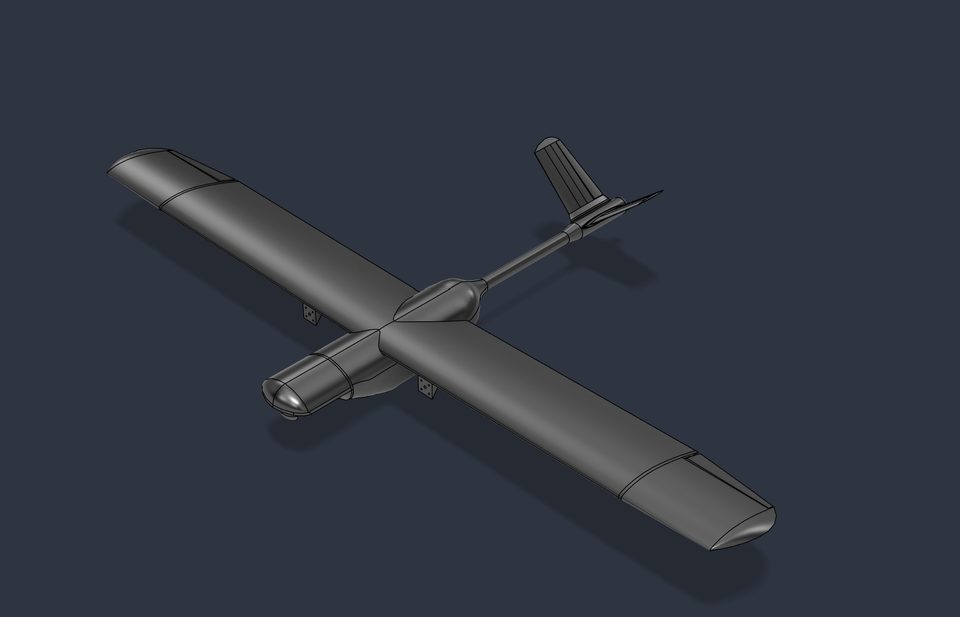 COMPLETED · FLIGHT-TESTED
Fixed-wing UAV
A 7-foot-wingspan fixed-wing UAV designed, fabricated, and flight tested, with CFD-informed wing and airfoil choices and a 3D-printed, TPU-hinged V-tail.
- SPAN 7 ft
- AIRFOIL NACA 4412
-
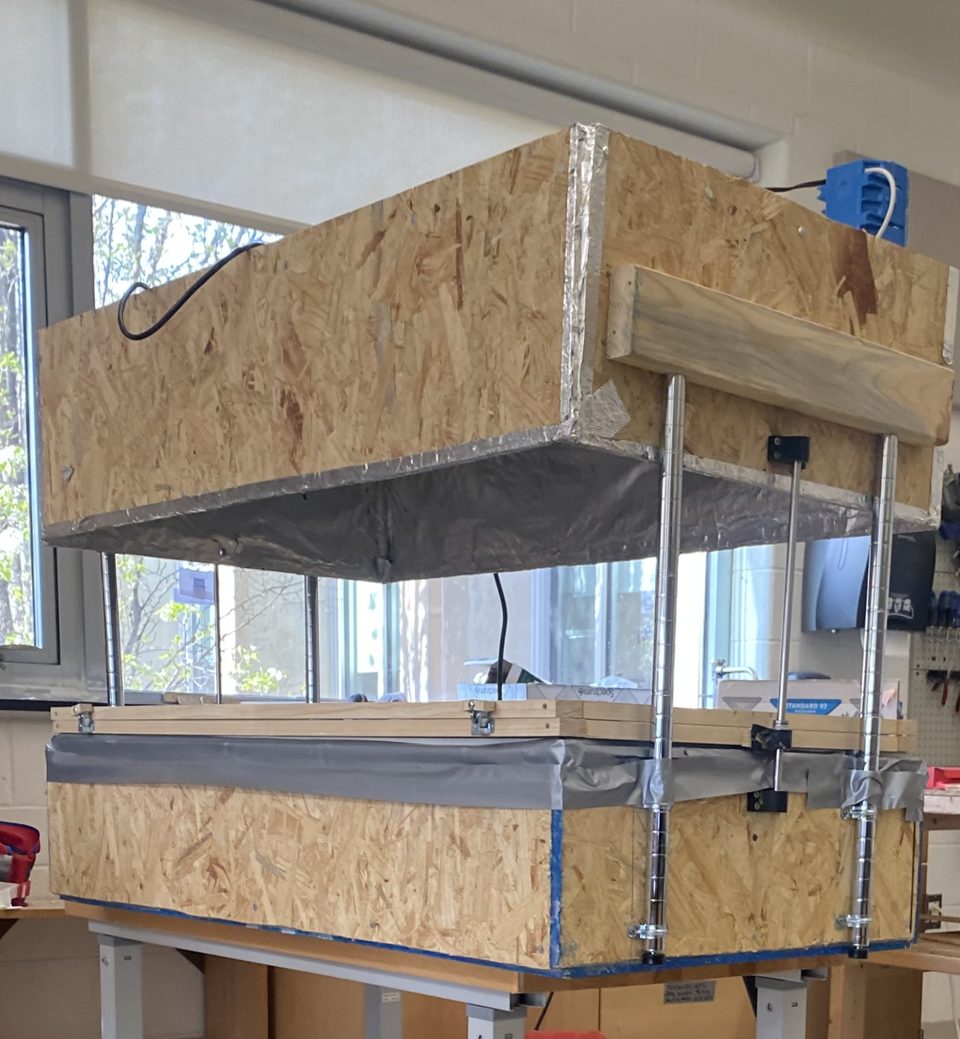 COMPLETED · BUILT & USED
Vacuum formers
A 2 × 4 ft vacuum former and an 18 × 18 in prototype built to form the capstone UAV's PETG skin, with a heater array of salvaged toaster elements designed to run within 10 A on a standard 120 V outlet.
- FORMING AREA 2 × 4 ft
- HEATER LIMIT 10 A
-
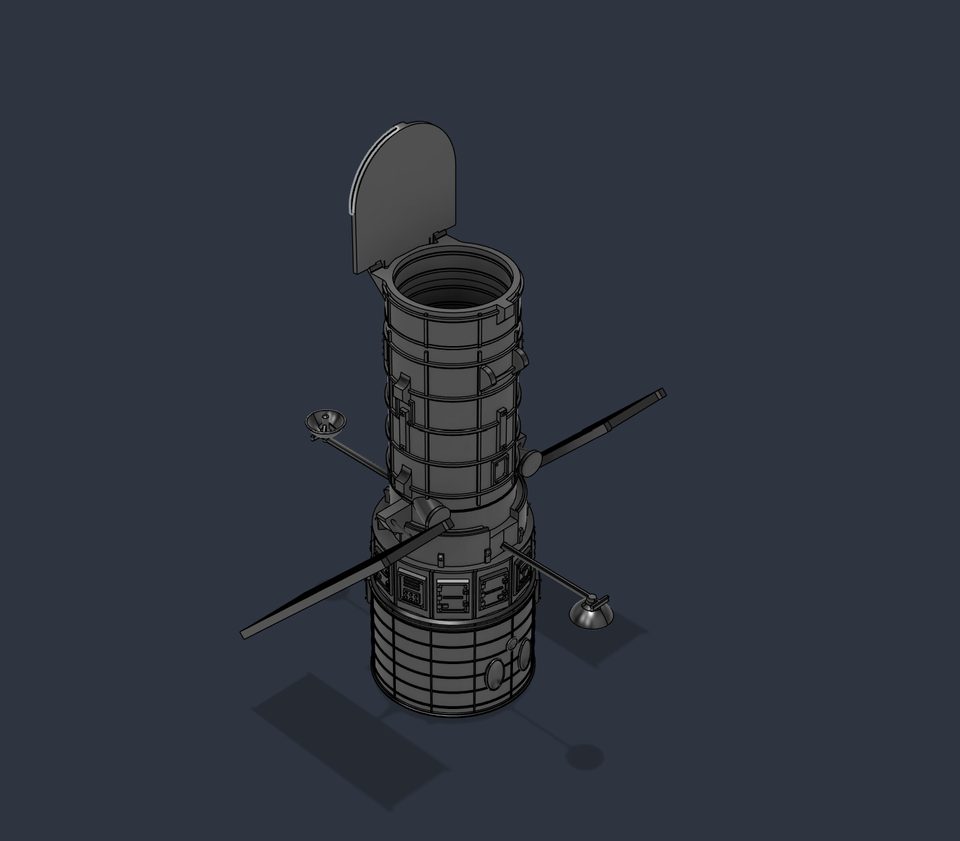 CLIENT WORK · COMPLETED
Smithsonian telescope replicas
As a CAD intern at Monster Fight Club, LLC, independently created or substantially reworked 12 Fusion 360 telescope models for Smithsonian Air and Space Museum hands-on displays.
- CLIENT Smithsonian Air and Space Museum
-
ACTIVE R&D
Talos Unmanned Systems
Founder-led UAV R&D: a Python MAVLink mission-planning UI and C++ telemetry/logging tooling are built and tested; a LiDAR/RGB-D sensor platform on a Raspberry Pi 5 with an AI accelerator is in design.
-
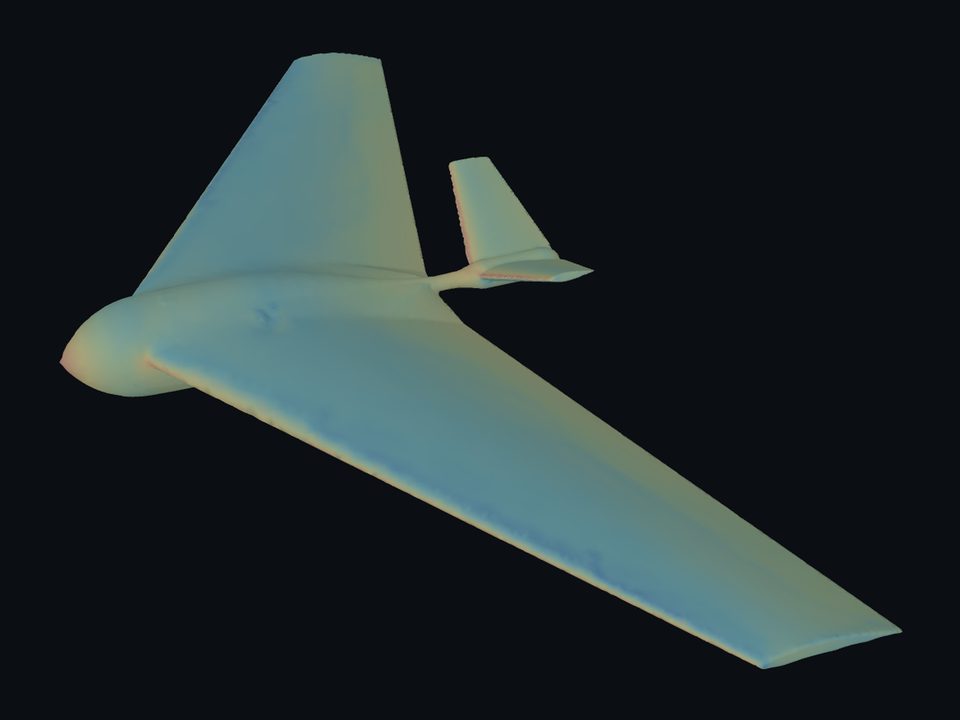 INDEPENDENT PROJECT · SOFTWARE
OpenFOAM® CFD simulation GUI
An AI-assisted GUI for STL-based OpenFOAM simulation setup, configurable multi-core runs, and interactive 3D visualization of surface pressure and streamlines, used to analyze a winged aircraft at sea level and 50 m/s.
- FLOW 50 m/s
- CASE Incompressible
-
DESIGN STUDIES
Design studies
An opposed-output gearbox and a stepper-motor-driven rising platform, both 3D-printed, built, and working as intended, plus an exploratory flying-wing concept UAV designed in CAD and analyzed in CFD but not yet built.


Experience
Internship, R&D, and education
A full-time CAD internship delivering museum display models, an independent UAV venture, and engineering studies at Dartmouth.
-
February 2026 – Present
Founder & Independent UAV Developer
Talos Unmanned Systems
Built and tested a Python MAVLink mission-planning UI and C++ telemetry/logging tooling; designing a quadrotor R&D platform intended to integrate a LiDAR array, RGB-D camera, Raspberry Pi 5 (8 GB), and AI accelerator.
-
June 16 – August 14, 2026
Computer-Aided Design Intern
Monster Fight Club, LLC
Full-time, on-site CAD internship producing 12 Fusion 360 telescope and component models for Smithsonian Air and Space Museum hands-on displays, from modeling through slicing, printing, and assembly.
-
Expected June 2030
B.A. Engineering Sciences
Dartmouth College
Pursuing coursework toward Dartmouth's B.E. program. Member of the Dartmouth Men’s Heavyweight Crew Team.
Skills
Design & analysis
- Autodesk Fusion 360
- Autodesk CFD
- OpenFOAM
- CAD/CAM
Fabrication & testing
- FDM 3D printing
- Resin (SLA) 3D printing
- Bambu Studio
- Vacuum forming
- Laser cutting
- UAV assembly and flight testing
Programming & systems
- C++
- Python
- Java
- MAVLink telemetry
AI tooling & workflow
- Claude / Claude Code
- OpenAI Codex
- Prompt engineering
- AI workflow design
- Agent skill authoring
- Multi-agent orchestration
Foreign language skills
- Russian — advanced speaking, reading, writing
Certifications
-
Autodesk · issued via Certiport
Autodesk Fusion Certified User
Issued April 27, 2026 · Valid through April 27, 2031
Verify credential on Credly (opens in a new tab)
AI workflow & agent tooling
I build and maintain a personal library of agent skills for Claude Code — versioned instruction packages that give a coding agent a specific working method, together with the eval harnesses that measure whether each one actually fires on the right prompts and stays quiet on the wrong ones. I use them to run my own engineering work, including the OpenFOAM CFD GUI.
| Skill | What it does | Structure |
|---|---|---|
honesty-broker |
Adversarial three-agent review. A pro advocate and a con advocate build the strongest honest case each way; an independent mediator that argued neither side returns a verdict with a confidence level and a checkable falsifier. Built to defeat sycophancy on consequential claims, with an evidence-tagging scheme that separates verified fact from inference and assumption. | SKILL.md + advocate and mediator role files |
management-chain |
Four-role agent organization — director, managers, workers, and independent reviewers — for builds too large or too correctness-critical for a single agent. The agent that writes code never approves it; a separate reviewer verifies before anything is called done, and the director audits integration across parts. | SKILL.md + four role files |
research-director |
Decomposes a topic into independent questions, dispatches scouts to do the retrieval, then synthesizes a citation-backed report with confidence levels, named conflicts between sources, and explicit gaps rather than smoothed-over guesses. | SKILL.md + scout and verifier role files |
effort-calibration |
A five-factor rubric — blast radius, ambiguity, solution-space search, coupling, verifiability — that scores a task into one of five model-and-effort bands before it is dispatched. Designed so that downgrading is a normal outcome: work with a narrow blast radius and an executable check is meant to come back cheap. | SKILL.md + rubric and audit reference files |
print-eject-timing |
Domain skill drawn from operating a print farm during my Monster Fight Club internship: given an STL, gcode, or Bambu 3MF file, predicts the bed release temperature at which a print can be automatically ejected, plus an estimated cooldown time. | SKILL.md + eval fixtures |
How I measure them
A skill that fires on the wrong prompt is worse than no skill, so each one ships an eval
harness rather than an assurance. Every harness holds 20 realistic queries — 10 that should
route to the skill and 10 near-miss negatives that deliberately share its vocabulary — judged
at two model tiers. The negatives are the valuable half: they test the boundary against
sibling skills. Prompts are generated from the live frontmatter by script and never retyped,
so a measured rate always traces back to the exact text that produced it. A mechanical gate
(check_budgets.py) checks frontmatter keys, character caps, and reference-file
structure on every edit.
| Skill | Model tier | Hit rate | False-trigger rate |
|---|---|---|---|
honesty-broker | Haiku | 10/10 | 0/10 (was 1/10) |
management-chain | Sonnet | 10/10 (was 9/10) | 0/10 |
research-director | Haiku | 10/10 | 0/10 |
research-director | Sonnet | 9/10 | 0/10 |
Get in touch
Open to Summer 2027 engineering internships. Reach out by email or LinkedIn, or download my résumé.